




- Bitcoin surged over $117K when the U.S. government shutdown, poor jobs numbers, and a weaker dollar stimulated high safe-haven demand.
- Institutional involvement was stimulated by regulatory changes, massive ETF inflows, and favorable corporate tax rules, which assured the increase in the role of Bitcoin in financial markets.
- The exchange reserves decreased drastically in September, indicating a decrease in the selling pressure in the case of long-term holders allocating Bitcoin into custody in the October rally.
Bitcoin advanced past $117,000 between October 1–2, 2025, gaining over 3%, as macroeconomic uncertainty, regulatory moves, institutional flows, and on-chain data came together to support additional strength in the market.
Macro Pressure Fuels Safe-Haven Demand
The U.S. government shutdown spooked traditional markets, pushing investors toward the refuge of safe-haven assets, such as gold and Bitcoin, while the weak labor data deepened anticipation for monetary easing.
According to the ADP employment report, there was job loss of 32,000, which is the worst month of job loss in over two years. While there has been a postponement of the nonfarm payroll data release, traders bolstered their bets for a Federal Reserve interest rate cut this October.
As a result, the dollar weakened dramatically, and Bitcoin benefitted from this dollar weakness, resulting from the combined risk aversion and shifting monetary policy expectations, that all came together for Bitcoin’s initial rise in October.
Regulatory Shifts and Institutional Interest
Regulatory developments also provided strong momentum. The SEC eased listing requirements for crypto ETFs, with upcoming reviews for Solana, XRP, and others scheduled this month.
Spot Bitcoin ETFs in the U.S. attracted nearly $1 billion in late September. BlackRock’s fund crossed $80 billion in assets under management, while reports suggested Vanguard may reassess its cautious stance on digital assets.
At the policy level, the U.S. Treasury confirmed unrealized Bitcoin gains held by corporations would not be taxed. This adjustment has encouraged expectations that more firms may allocate Bitcoin to corporate balance sheets.
On-Chain Data Confirms Long-Term Strength
On-chain activity reinforced bullish sentiment. CryptoQuant reported Bitcoin reserves on exchanges fell from 2.61 million in early September to 2.49 million by October 1.
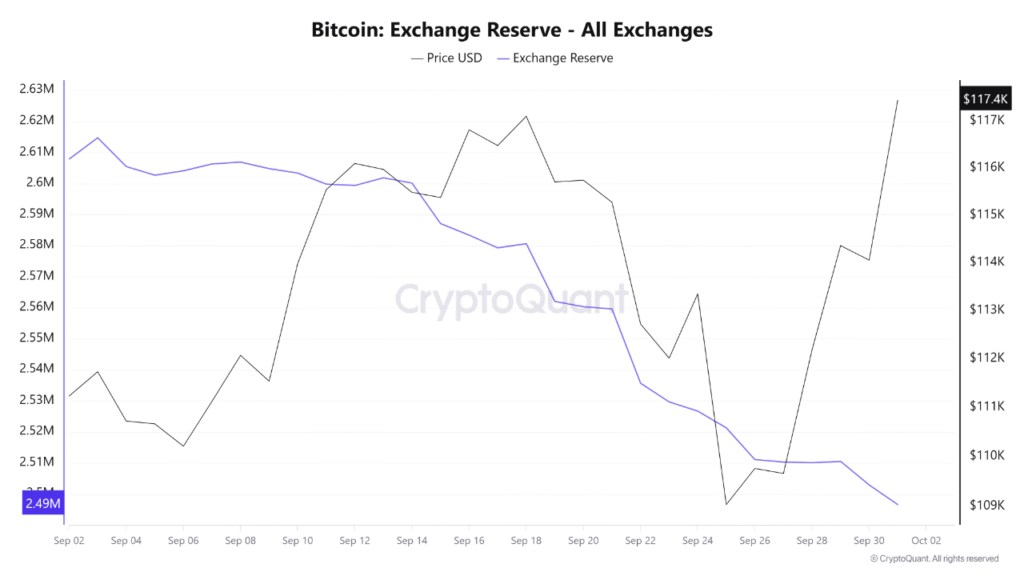
This decline suggested coins were moving off exchanges into long-term custody, reducing potential selling pressure. Lower liquid supply has historically supported stronger price trends during bullish phases.
Seasonal factors also supported confidence. October has traditionally been a favorable month for Bitcoin—often referred to as “Uptober.” With gold reaching record highs simultaneously, digital assets benefited from rising optimism across global markets.
