




- Bitcoin fell below $115K after reaching $117K, as spot demand weakened, futures distribution increased, and participation in spot trading cooled.
- Futures markets showed negative perpetual CVD reflecting aggressive sell pressure, while options activity indicated stronger participation and rising expectations of volatility.
- U.S. spot Bitcoin ETF inflows fell sharply, but on-chain signals recovered with higher active addresses, transfer volumes, and stronger capital flows.
Bitcoin dipped below $115,000 after increasing to $117,000 prior to the Federal Reserve meeting, as reduced spot flows, sell pressure in futures, and softer ETF demand signaled reluctance in the market.
Spot Momentum Weakens After Strong Rally
Glassnode reported that Bitcoin’s spot market showed fading momentum after its rapid rise. The relative strength index eased from overbought levels, pointing to reduced buying activity. Cumulative volume delta fell sharply, highlighting weakening demand across the market.
Spot trading volumes also moved toward the low band, signaling fragile participation from both retail and institutional investors. This decline in volumes suggested that the strength of the earlier rally was losing support from fresh capital inflows.
The slowdown left the spot market vulnerable to increased volatility. Without stronger demand, the market showed less resilience against pressure from traders reducing risk exposure.
Futures and Options Show Stronger Sell Pressure
The futures market delivered mixed but cautionary signals. Open interest remained elevated, showing sustained positioning from traders. Funding rates edged higher, suggesting modest optimism. However, perpetual futures data revealed a sharp plunge in cumulative volume delta, indicating aggressive selling by leveraged participants.
This pattern reflected distribution into strength, as traders locked in profits following the recent surge. The selling pressure weighed on momentum and introduced short-term volatility into the market structure.
Options activity reinforced the picture of uncertainty. Open interest broke above its high band, showing stronger participation, while volatility spreads widened significantly. This pointed to greater market uncertainty around price direction.
Options skew edged higher, indicating mild downside hedging activity. While not overly bearish, it revealed caution among traders positioning for potential declines rather than a seamless continuation of the uptrend.
ETF Inflows Cool While On-Chain Data Improves
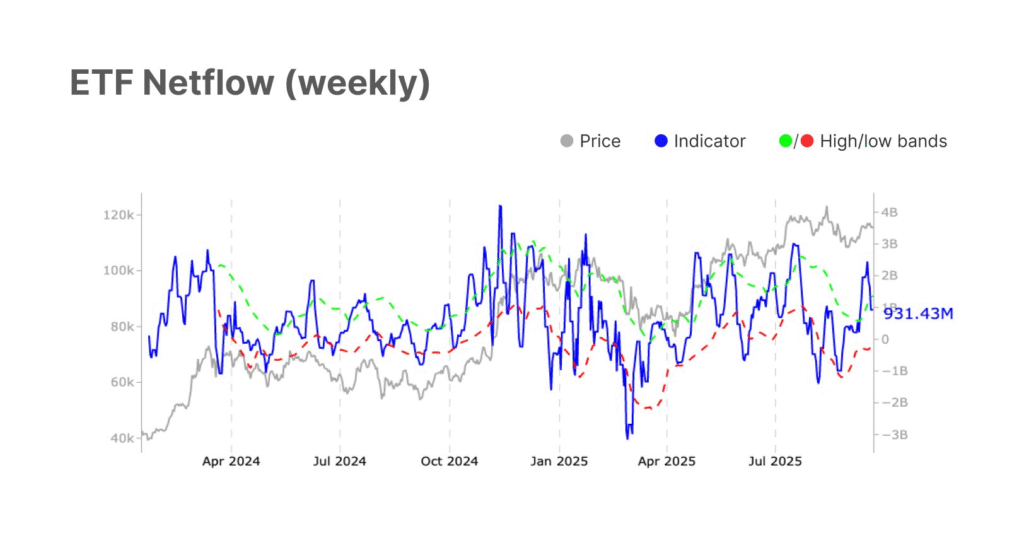
Glassnode also observed a slowdown in U.S. spot Bitcoin ETF flows. Net inflows dropped notably after a strong prior streak, while trading volumes remained steady. The moderation suggested tempered institutional demand, hinting at a pause in accumulation by traditional finance participants.
On-chain activity showed improvement in some areas. Active addresses and transfer volumes increased, signaling healthier engagement and stronger capital flows across the network. However, transaction fees declined, pointing to lighter speculative activity and lower congestion.
Capital flows remained steady but cautious. Realized cap change slowed, while the short-term to long-term holder ratio rose modestly, reflecting stronger short-term participation. This increase in hot capital flows raised the risk of greater volatility.
Profitability metrics also improved, with realized profit and loss, NUPL, and supply in profit all climbing. While this reflected a broadly profitable market, the rising wave of realized gains suggested demand could weaken if spot flows fail to absorb selling pressure.
