




- Open interest in Bitcoin dropped by $12 billion, marking a wide-ranging structural unwind that wiped out too much leverage in derivatives exchanges.
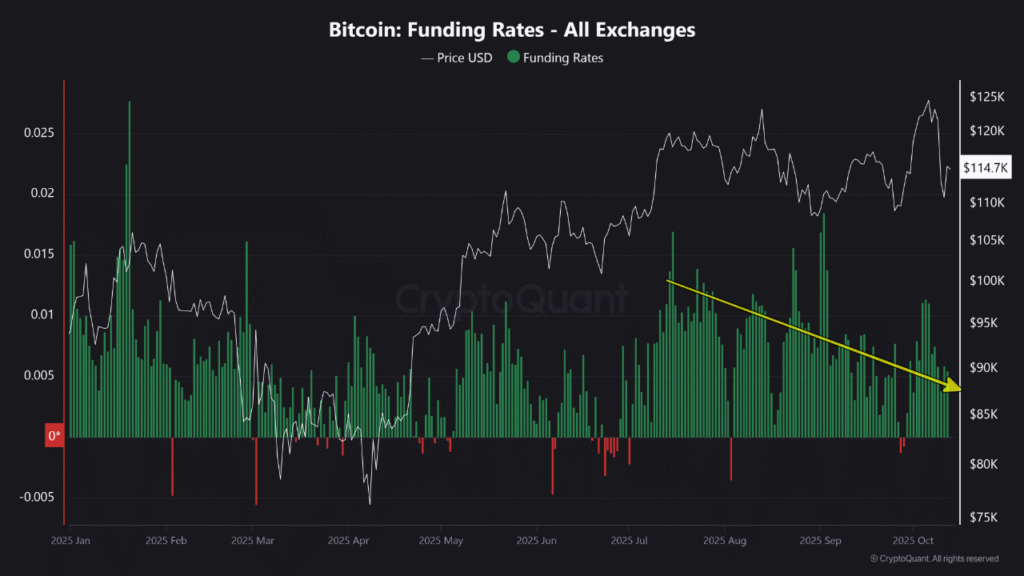
- Funding rates stabilized, having in the mean time gone negative, indicating the transition to more moderate trading behavior rather than speculative trading.
- Bitcoin Stablecoin Supply Ratio was reducing to April lows, which implies that there is more liquidity and possible entry capital into the market.
The derivatives market for Bitcoin has gone through a significant structural reset, with $12 billion in open interest being wiped out within a few days. This represents a broad-based deleveraging across exchanges, which transforms how positions in the market look and makes investors wonder if the reset will lead to further strength.
Open Interest Decline Signals Broad Market Unwind
After Bitcoin’s most recent price high, open interest diminished from $47 billion to roughly $35 billion—meaning a $12 billion reduction. This represents one of the largest position activity pullbacks we’ve experienced during the recent cycles and suggests traders were quickly closing out leveraged positioning in a higher volatility environment.
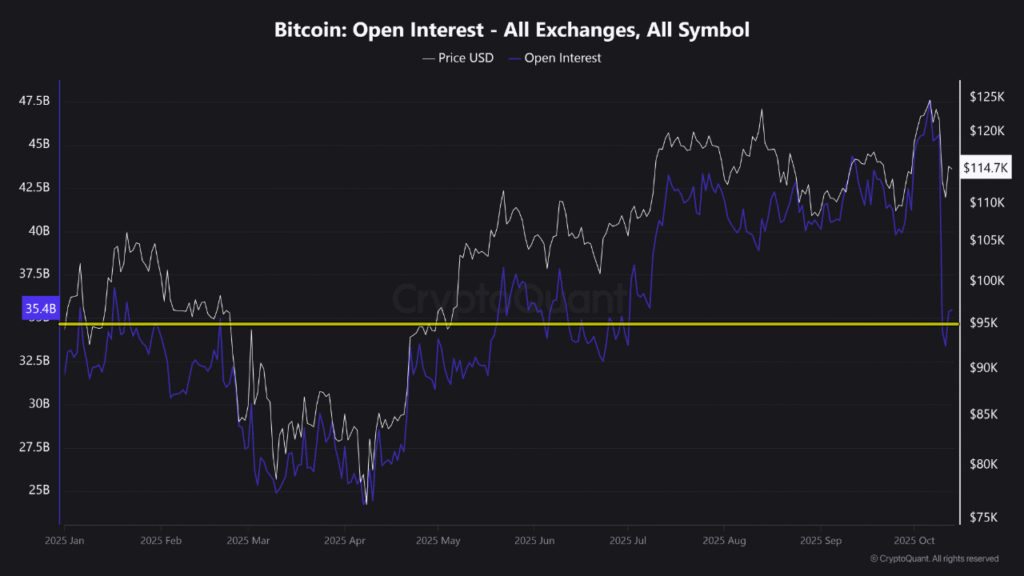
The significant drop shows a cleansing process, where speculative leverage is removed from the system. During similar market resets in previous years, excessive leverage often preceded deeper corrections before conditions normalized. The recent adjustment now positions futures markets in a leaner and more stable state.
As EgyHash observed, this reset mirrors the structural unwind last seen in mid-2022. The retreat in open interest has helped restore balance between long and short positions, allowing natural market forces to dictate price action rather than overextended leverage.
Funding Rates and Leverage Ratios Reflect Market Stabilization
The recent correction temporarily pushed Bitcoin funding rates into negative territory, which reflects short-term panic for traders who are leveraged long. But funding soon came back to modestly positive funding levels, a reflection of neutral sentiment slowly coming back to the market. The normalization of funding rates between positive and negative may reflect a change in trader behavior from being overly speculative to a more prudent position.
The Bitcoin Estimated Leverage Ratio (ELR) also fell after matching its highest level since 2022. The drop in ELR shows traders are using less leverage as a whole, which is common with resets in structure. Such conditions typically mark the start of more sustainable trading behavior across derivatives platforms.
In the past, these stabilization sequences followed extreme liquidation events. As funding and leverage ratios return to moderate ranges, volatility tends to settle, and recovery can begin on an organic demand basis, as opposed to speculative excess.
Rising Stablecoin Liquidity Suggests Potential Reentry Zone
Beyond derivatives activity, liquidity indicators also shifted meaningfully during the reset. The Bitcoin Stablecoin Supply Ratio (SSR), which compares Bitcoin’s market capitalization to the liquidity of stablecoins, has fallen to its lowest level since April, which indicates that there are more stablecoin funds ready to jump back into the market.
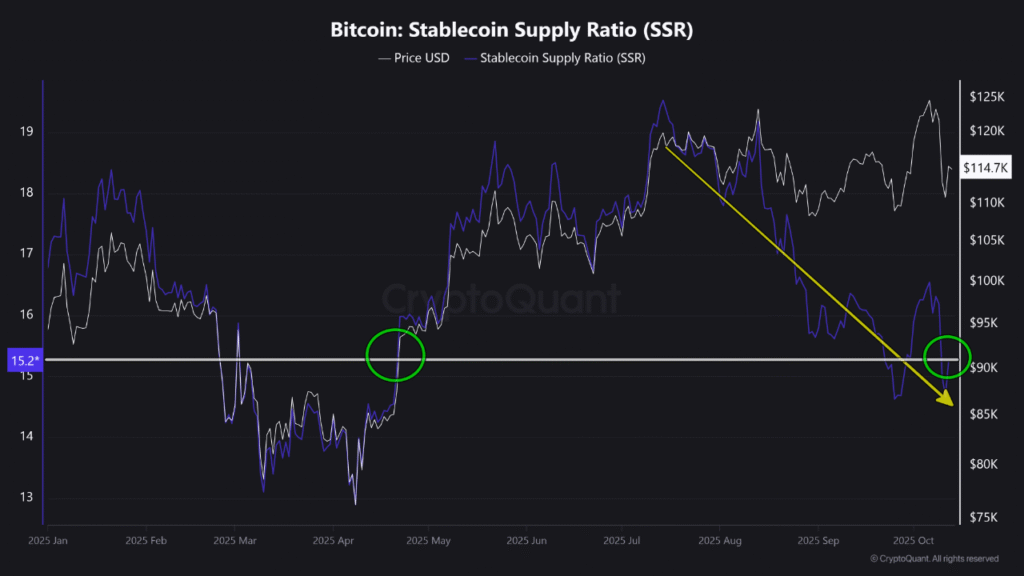
A lower SSR often precedes renewed accumulation phases, as traders with fresh liquidity position themselves for medium-term opportunities. The influx of stablecoins across exchanges represents potential buying power that may return once sentiment turns more constructive.
Collectively, these market changes depict a broad structural recalibration rather than a prolonged downturn. The clearing of excessive leverage, normalization of funding, and rising liquidity together set a firmer base for Bitcoin’s next trend. Whether that transition leads to renewed upside will depend on how traders deploy the fresh capital now waiting in stablecoins.
