




- Increased outflows of stablecoins from exchanges show investor confidence is increasing as investors shift into Bitcoin, Ethereum, and other higher-risk crypto assets.
- Decreased liquidity from exchanges suggests the market will be tighter, with less depth to the sell side increasing volatility in volatile periods of buying.
- Capital moving onto blockchain protocols, such as DeFi and staking, reflects a crypto system that is maturing and traditional yield-seeking strategies are developing.
The increases in stablecoin outflows from large exchanges indicate that investors are becoming more comfortable with risk assets, but at the same time, this could also expose the crypto market to fragile short-term liquidity.
Stablecoin Withdrawals Reflect Growing Risk Appetite
Reviewing data from the All Stablecoins (ERC-20) Binance chart reveals a distinct increase in negative net flows. This suggests that there is an increased amount of stablecoins coming off the exchange to a non-exchange wallet, which typically indicates some renewed risk-on behavior by traders and institutions.
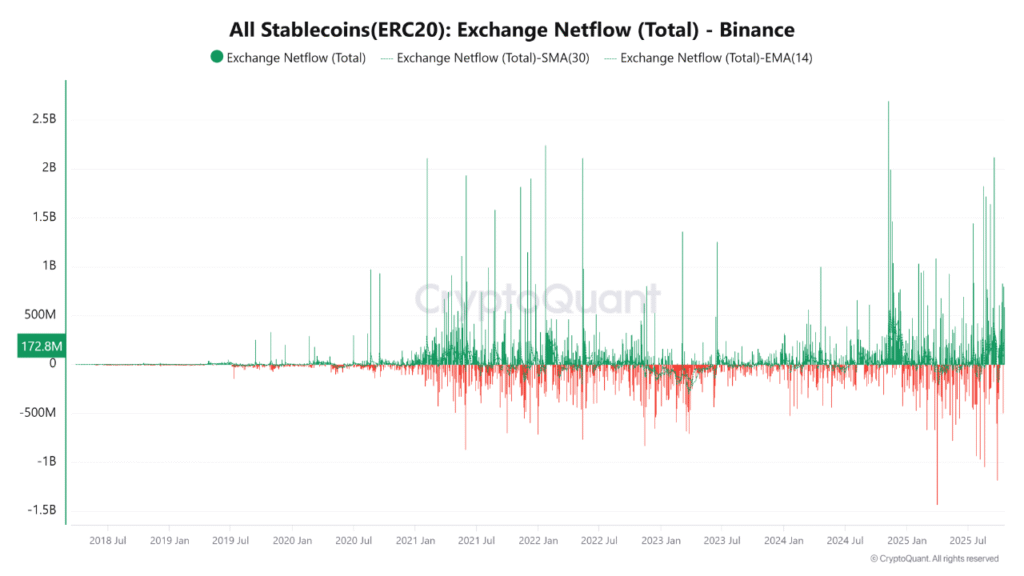
When stablecoin is withdrawn from the exchange, it generally is moving toward a decentralized finance platform, or being held to purchase in the on-spot markets. This indicates that market participants are getting ready to gain exposure to Bitcoin, Ethereum, or new altcoins. Traders often act when they begin to convert stable holdings into assets prone to volatility during periods of bullish price action.
However, while this is a sign of confidence in the market, it reduces liquidity on the exchanges. The lower the reserves of stablecoins on exchanges, the shallower the sell side market depth, which creates sharper price actions when buying demand increases.
Market Liquidity Weakens Amid Shifting Capital Flows
The continuous tethering of stablecoins has commenced to change the liquidity dynamics on key trading venues. With lower exchange balances, there are fewer stable assets available to absorb large buy or sell orders during periods of active trading, leading to increased price sensitivity and wider bid-ask spreads.
This environment builds a more sensitive market structure and, as a result, any sudden shift in buying pressure has the potential to catalyze a faster and even larger price increase. Similarly, in times of stress or reversal, liquidity will be impaired, making the market less stable and, at times, “overshoot” on the downside.
Persistent negative flows also raise concerns about reduced fiat inflows. If fewer new funds enter the ecosystem to replace outgoing stablecoins, the market’s capacity to sustain rallies could weaken over time. This balance between optimism and liquidity strain defines the current trading environment.
On-Chain Deployment Signals Maturing but Fragile Conditions
Despite the liquidity challenges, not all capital leaving exchanges is idle. A substantial portion is being redirected to on-chain opportunities such as staking, liquidity provision, and decentralized lending. This signifies that the market is not receding, but instead refocusing capital on productive uses in the ecosystem.
These transitions don’t just indicate more sophistication among crypto investors (they are now looking to generate yields on stablecoins), rather than just in stablecoin storage and speculation. But the concentration of funds in DeFi protocols also adds to liquidity fragmentation across platforms.
At present, the combination of reduced exchange-based liquidity and growing risk appetite paints a dual picture: optimism driving asset accumulation on one hand, and a thinner, more fragile liquidity base on the other. This environment may support upward price movements in the near term but leaves the market more vulnerable to volatility if inflows fail to replenish exchange reserves.
