




- Binance retail inflows surged to $18B, matching the same levels seen before Bitcoin’s August and September price corrections.
- Data shows smaller traders are re-entering as Bitcoin consolidates between $110,000 and $125,000, signaling renewed speculative participation.
- Coinbase’s $648M USDC outflow indicates shrinking stablecoin liquidity as retail demand peaks, mirroring past pre-correction market conditions.
Bitcoin’s 30-day average retail inflow to Binance has surged once again to $18 billion, returning to levels last seen in early August and September—periods that both preceded notable price pullbacks within weeks.
Retail Inflows Back at a Key Threshold
Recent on-chain data shared by Amr Taha shows that Binance’s retail inflows have climbed back to the $18 billion mark, a threshold that has historically aligned with local market tops. The pattern has been clear: Event 1 on August 9 saw heavy retail participation followed by a correction, while Event 2 on September 6 mirrored that behavior, resulting in another short-term decline.
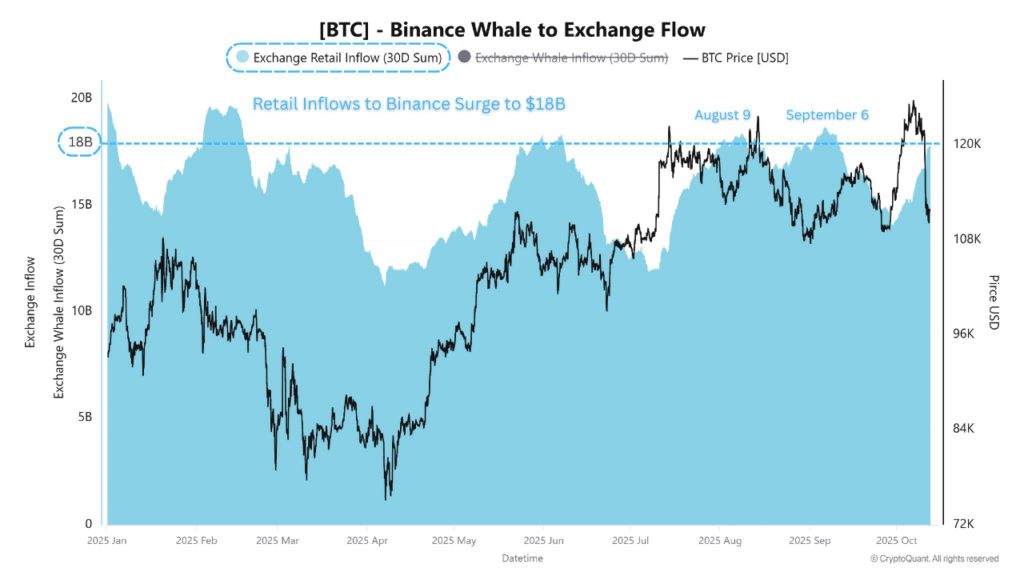
Now, a third event has emerged. Retail inflows are once again pressing against that same $18 billion zone, raising questions about whether Bitcoin could repeat its earlier declines. Historically, these spikes in inflows indicate increased retail interest—common when markets are nearing short-term highs.
As Bitcoin moves between $110,000 and $125,000, investors are nervously waiting to find out if this cyclic pattern will once again hold true.The previous inflow surges were followed by cooling phases lasting one to three weeks, adding weight to current market caution.
Shrinking Stablecoin Reserves Add Complexity
Alongside the renewed retail activity, stablecoin data reveals a different story. On October 11, Coinbase Advanced recorded a -648 million USDC outflow, marking a substantial drop in available buying power across exchanges. This decline in reserves suggests traders may have fewer stablecoins ready for immediate market entry.
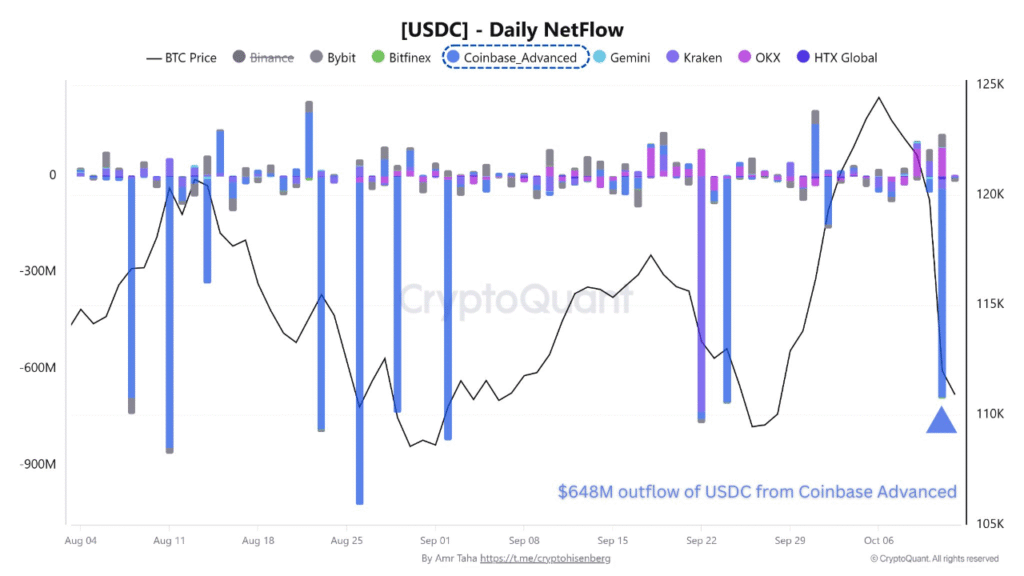
Stablecoins often act as a liquidity buffer, fueling new buying when sentiment improves. With reserves shrinking, the market may face short-term pressure if fresh capital does not enter soon. The simultaneous rise in Binance retail inflows and decline in stablecoin liquidity creates a mixed setup—strong participation from smaller traders, but potentially less overall buying capacity.
If these conditions persist, Bitcoin’s next move could mirror its August and September behavior: a surge in retail enthusiasm followed by a moderate correction. Market observers are now closely tracking whether this pattern will once again play out as Bitcoin hovers near its upper trading range.
